
Responsible Recreation
With lots of different recreation types across the Methow Valley, it’s important we all do our part to minimize recreation impacts and share the trails. Several different advocacy organizations have put together responsible recreation messaging. Check out some of the information below to learn how you can reduce your impact when out on the trials.
multi-use trail ediquette
Stay safe by learning who yields when people, animals, and vehicles meet on a trail.
Many trails in the area are multi-use, meaning that hikers, mountain bikers, horseback riders, and motorcyclists may all share the same trail. On these trails, the basic etiquette rule is that the wheels yield. Bicyclists, e-bikes, and dirtbikes yield to all other users while hikers yield to horseback riders. Remember, every user type has the right to enjoy shared trail networks. It’s our responsibility as trail users to be ambassadors for our chosen use type and meet other trail users with kindness and respect. We’re all out for the same goal: a nice day outdoors.

-
Move off the trail whenever possible for other trail users. Preferably on durable surface.
When meeting someone riding a horse, step off the trail to the downhill side and speak calmly. This allows the horse to recognize you as human.
Dogs can potentially frighten horses. Be sure to keep your dog quiet, close to you, and still when sharing a trail with horseback riders. Leashes are highly recommended and encouraged.
When hiking in a group, hike single file, never taking up more than half the trail, and stay on the trail itself. Over time, off-trail use can badly erode switchbacks and destroy drainage diversions. When a group meets a single hiker, it’s generally preferable for the single hiker to yield and step safely to the side.
Hikers going uphill have the right of way. An uphill hiker may let others come downhill while they take a breather but remember that’s the uphill hiker’s call.
-
Know your ability, equipment, and the area.
Always yield trail. Move off the trail for less mobile users, including hikers and horseback riders.
Don’t ride under conditions where you leave evidence of passing, i.e. after heavy rain, or during spring melt.
Stay on the trail.
Don’t ride through streams.
Make your presence known at corners or blind spots.
Control your bicycle
Conscientious mountain bikers will call out as they come down steep slopes or blind switchbacks and should also let you know if there are other bikers following them.
Bikes should never pass a horse from behind. Call out that you want to pass, so the rider can turn the horse around to face the bike. When a horse is coming towards you, bikers should stop, move to the downhill side of the trail and say hello. If the animal appears anxious, bikers should consider taking off backpacks or helmets and dismounting their bikes.
-
Practice minimum impact techniques.
Scatter stock manure at highlines when leaving camp.
Keep horses in a campsite only long enough to unpack or pack them.
Stock tied to trees ruins trees and turf: do so only for a short time. Use highlines where available. Highlines should be 7’ off the ground.
Never tie, graze, hobble or hitch horses within 200 feet of lakes, streams, or springs.
Be sure to use state-certified weed free hay or grain.
-
Approach pedestrians slowly, pull over, and turn off your engine.
When passing someone, follow at a safe distance until you reach a safe place to pass, then do so at a slow speed.
Minimize noise with proper care and operation of your vehicle.
Respect trail closures.
Stay on the trail.
Don’t ride on areas that are wet, have loose soil, steep slopes, meadows, or swamps.
Motorized vehicle riders should stop their vehicle, turn off the engine, and let horseback riders pass. Additionally, motorized users should allow the horses to move a considerable distance down the trail before starting the engine back up.
FOOD STORAGE
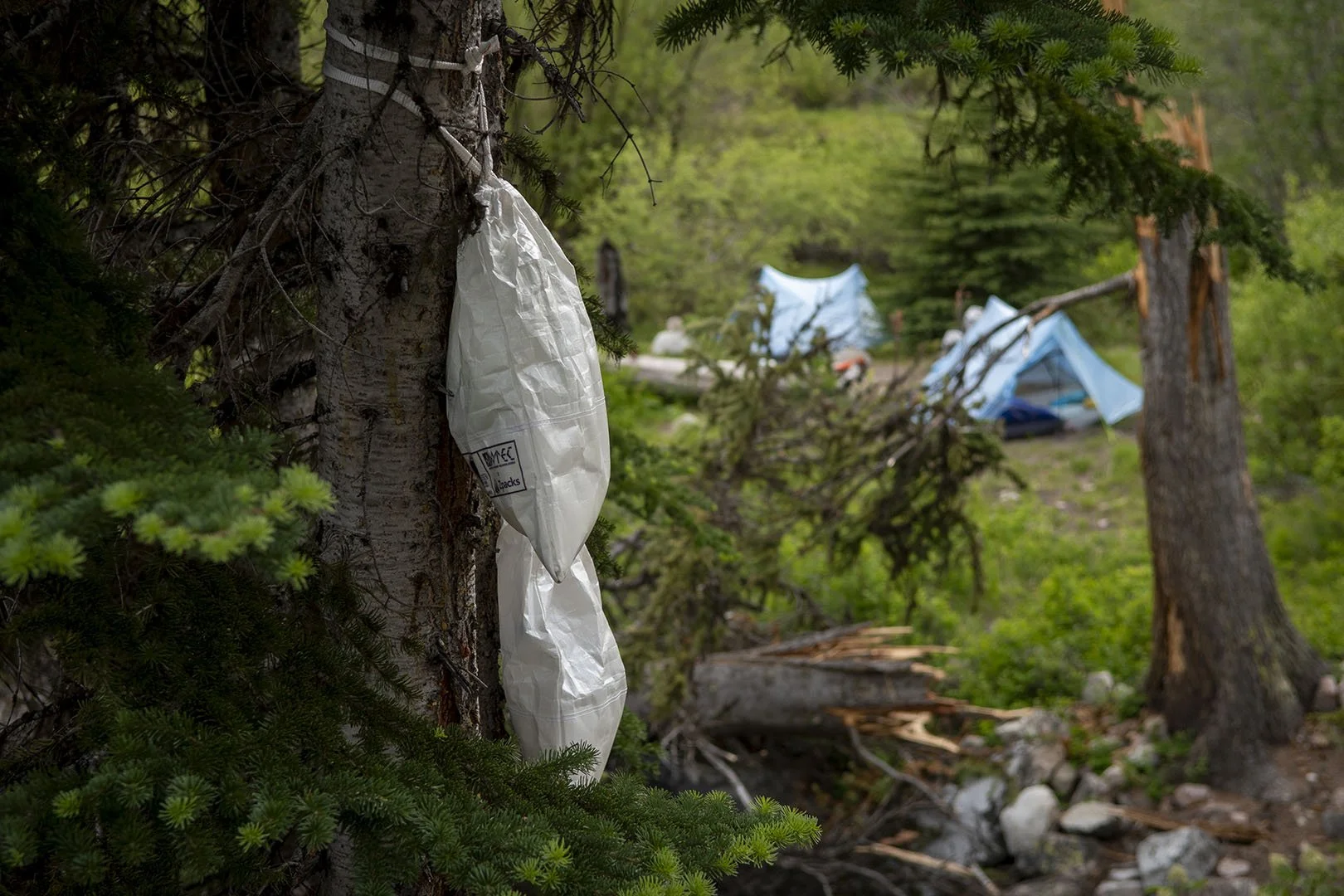
The Okanogan-Wenatchee National Forest has implemented wildlife safe food storage requirements across the entire national forest. The food storage order is intended to reduce human/wildlife conflicts.
The forest order requires visitors to store food items in a “bear resistant manner” and to properly dispose of wildlife attractants such as food, beverages, pet food, garbage, uncleaned cookware, and other "smellable" items like scented soap, toothpaste, candles, wildlife carcasses, etc. . The storage requirement does not apply when preparing or eating food, or when food is being transported.
SENSITIVE VEGeTATION
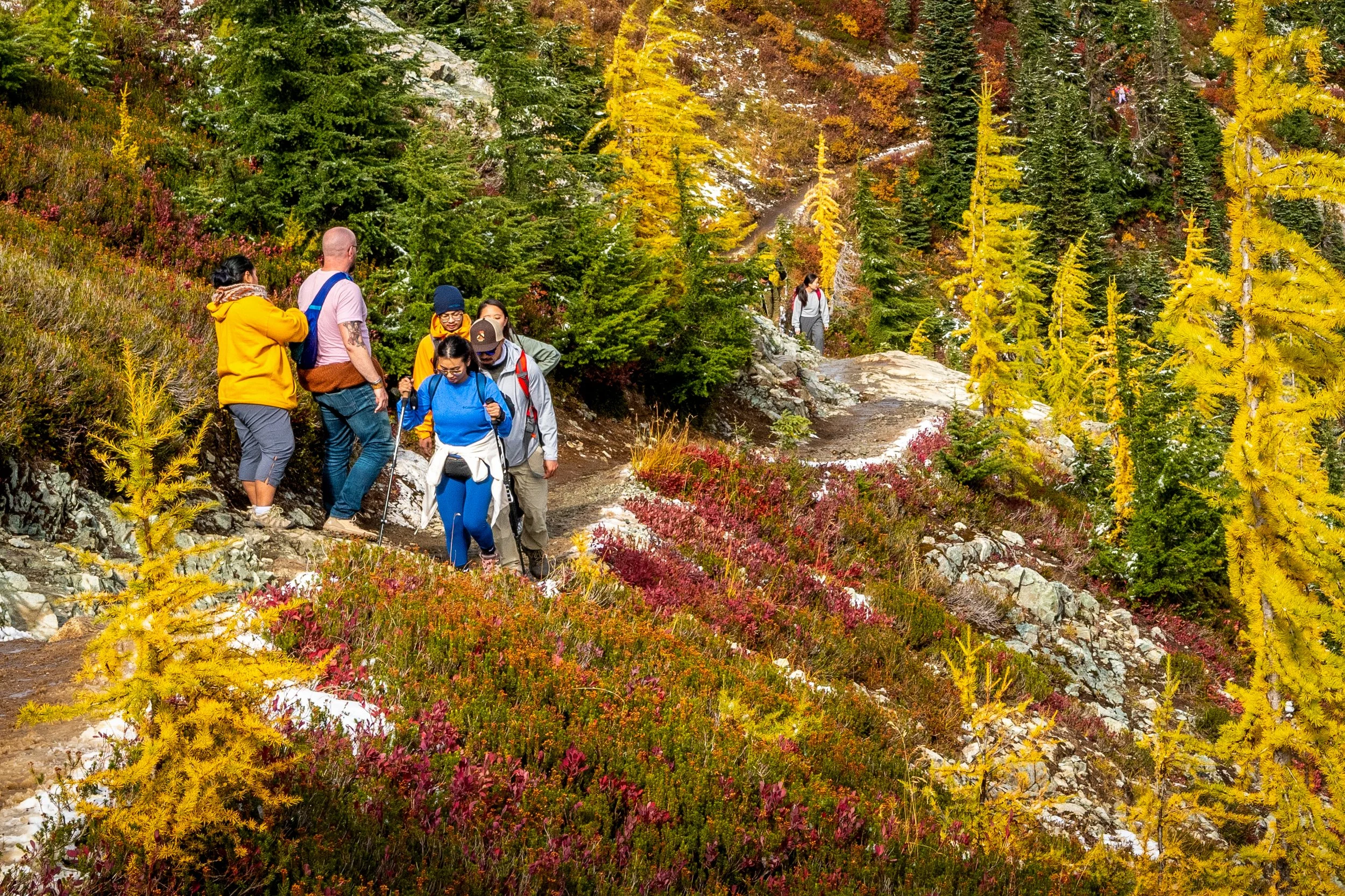
In sensitive alpine and subalpine areas, please stay on designated trails. Just a few footsteps can kill sensitive plants such as Heather, and recovery times in the alpine environment are very slow. Please respect posted signage and restoration areas. When a trail is obscured by snow, multiple braided trails can form as people try to locate the trail. In the Heather/Maple Pass area, please follow the orange snow stakes to reduce impacts on vegetation. Make an effort to be on a durable surface when taking a break or letting others pass.
In less busy areas where off trail travel is necessary, people can spread out and avoid walking in a straight line to reduce impacts.
dogs/human wildlife interactions
Each land management agency has different rules for different areas. Be sure to check the regulations of where you may be heading.
In the Methow Wildlife Areas, managed by the Washington State Department of Fish and Wildlife, dogs are required to be leashed from April 1st to July 31st. This regulation is in place to help protect the wildlife, specifically ground-nesting birds, and help maintain the land as high quality wildlife habitat.
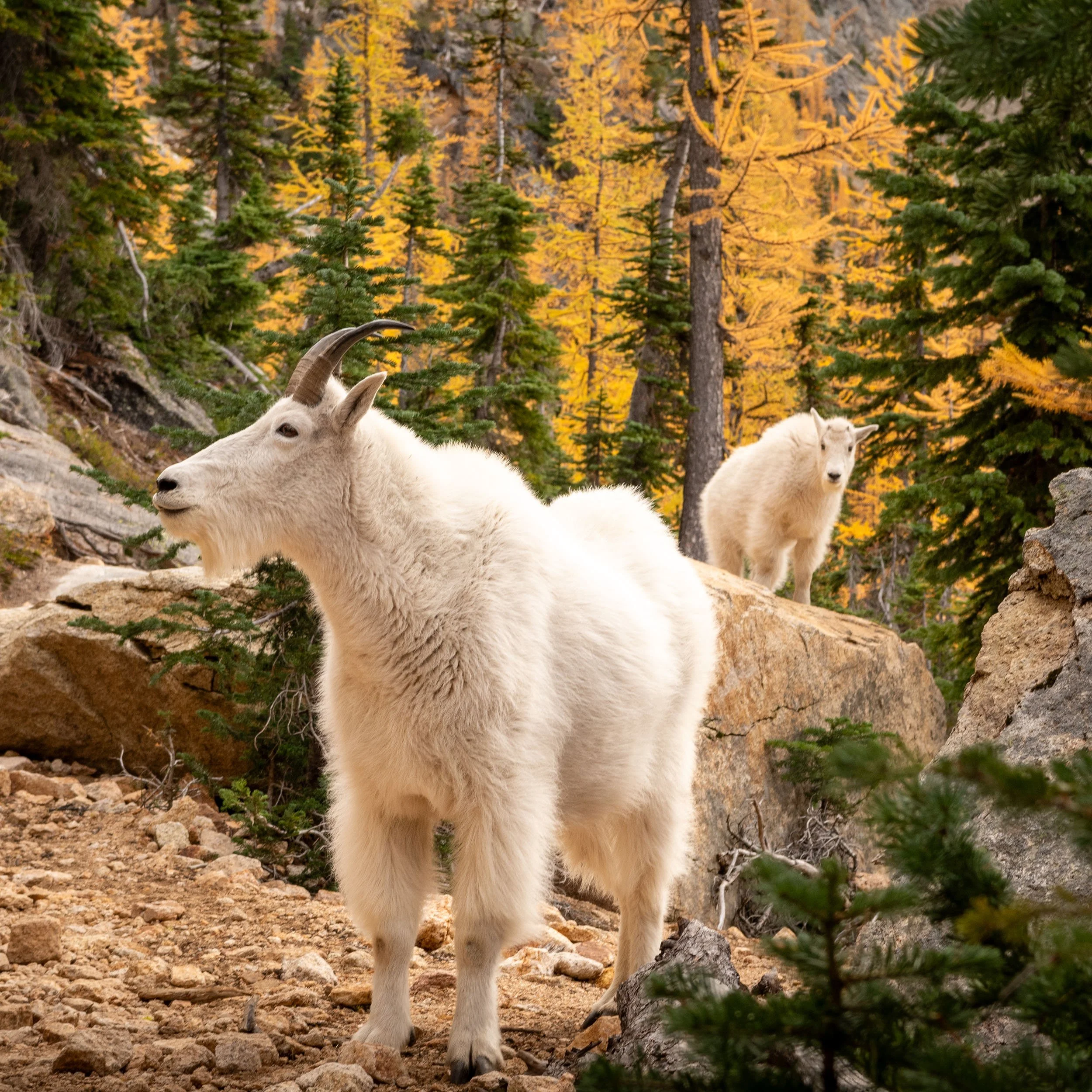
For the National Forest lands, dogs are allowed everywhere. Dogs are required to be on a leash in campgrounds. Dogs must either be on a leash or under voice control on all areas outside campgrounds on the National Forest. In busy areas and/or when there are mountain goats or other wildlife present, it is strongly recommended that people put their dogs on a leash, but it is not required. Mountain goats can be aggressive toward dogs to protect young. Please keep dogs on a leash in areas where mountain goats are frequently seen such as Blue Lake, Liberty Bell, Cutthroat Pass and Cathedral Lakes. You might know your dog doesn’t pose a threat to the wildlife or other users, but the wildlife or the other users do not know that!
Please pack out your dog waste bags rather than leaving them on the side of the trail.
high use/parking
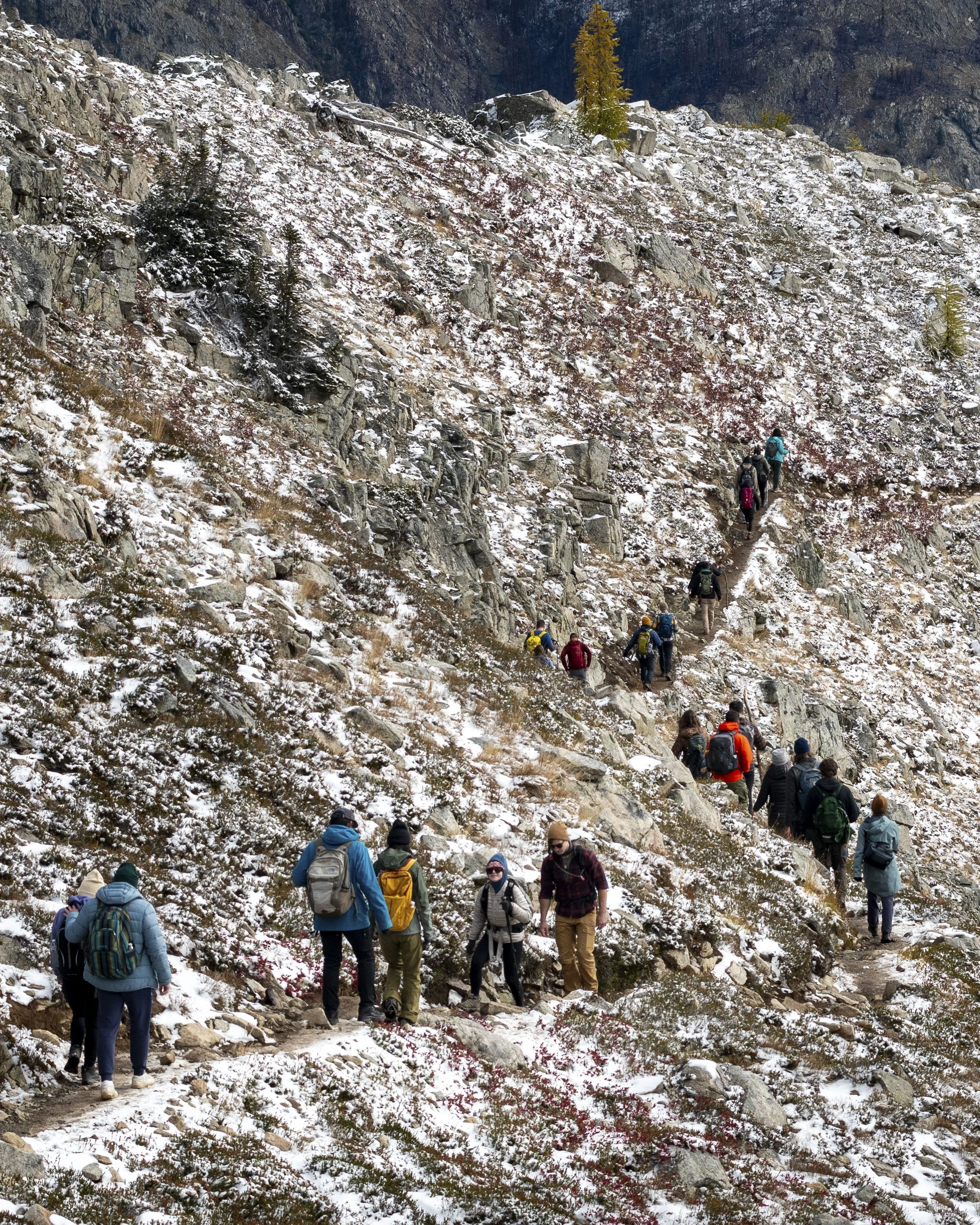
Trails that have been flagged as high use are popular area trails that see constantly higher visitation numbers than other trails in the area. Sometimes this influx is seasonal (think larches in fall) or they typically see high daily user numbers. When heading to a trail that is known to be high use, there are a few things to consider and be prepared for.
-
Many trailheads are small and have limited parking. Do not block access into or out of the trailhead or turn around areas. Remember emergency vehicles need to be able to pass through at all times. This also applies to the roadways. Parking alongside the roadway is discouraged for safety. Please respect and adhere to all posted signage and Department of Transportation regulations. If the parking lot is full, have a plan to go elsewhere or return at a different time. Know what the parking requirements (passes) are for that trailhead/area. Please don’t park on tall grass, especially in the summer months as it is a fire hazard.
Remember that unless otherwise posted, high use trails are open to equestrians. To transport stock, equestrians often drive larger vehicles with trailers. Try to leave space for a trailer turnaround at all parking lots, and do not park in front of a designated stock ramp. Blocking these trailhead features can impede equestrians from accessing their chosen trails, or limit the ability of the USFS to access the trails with their pack string. The latter can impede trail improvement projects or search-and-rescue efforts.
-
Please remember that most trailheads do not have trash service. It is extremely important to take all your trash with you when you leave. This is especially true with high-use areas. From snack wrappers, tissue paper, dog waste bags and food scraps, trash left along the trail can severely affect the environment, wildlife and everyone’s experience. So please do your part and take your trash with you.
-
With the increase in users comes an increase in wear on the trails. Land managers and trails collaborative partners do our best to harden trail surfaces which offsets this wear and tear. You can do your part to help by staying on the trail. Don’t create new user trails, or cut switchbacks. This promotes erosion and further degrades the trail and surrounding area. Respect and follow all posted signage. Make an effort to be on a durable surface when taking a break or letting others pass.
-
Everyone deserves access to nature. Be kind, patient and aware of others' needs.
FIRE SAFETY

Eastern Washington is an arid landscape, and the last thing we want to do as recreationists is start a wildfire. There are ways to have a campfire responsibly, but often, it is too dry to even take the risk. Fire restrictions are often still in place even after recent rains. Check each land managers fire information page before you bring that bundle of firewood on your trip.
Okanogan County Burn Ban Information
Methow Valley Ranger District fire restrictions
Department of Natural Resources Burn Restrictions Map for State Managed Lands